
Whitepaper
Walk any estimating floor during a heavy bid week and you’ll find the same scene: a senior estimator moving numbers from a plan set into a spreadsheet, then into a bid form, then into an email to a sub. None of that is estimating. It’s transcription — and it almost never lands on a cost sheet.
On a typical commercial bid, five hours go into the cycle. Two are real takeoff. The other three are what we call carrying: keying, restructuring, and copying data that already exists in a document somewhere. That split is the whole game. The question isn’t whether your team works hard — it’s how many of their hours go to judgment versus data entry.
Construction bidding software earns its place when it gives the carrying hours back. But you can’t evaluate that until you’ve priced what those hours cost you today.
Stop wasting time and money. Download the guide and learn how to win more, faster.
What You’ll Learn Inside
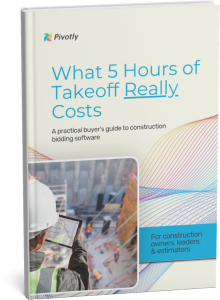
This practical buyer’s guide lays out the real cost of the five-hour bid cycle, where the carrying hours hide, and what construction bidding software actually does — broken into the five jobs that matter for a GC estimating team. Inside, you’ll also find:
- A fillable worksheet with a ten-minute, pen-and-paper calculation you run on your own shop: set your loaded estimator rate, log time across three real bids, and arrive at your annual cost of carrying — the one number to hold every software quote against.
- A buyer's checklist with questions to take into every demo, scored against your own bid-cost number — so you're evaluating tools on the hours they give back, not the features they list.
- A worked example throughout, based on a $30M-revenue GC bidding commercial work, costed line by line, so you can see the math before you run your own.