

A five-question script for procurement requirements gathering
You do not need a long form to get a clear requirement. What you need is a consistent set of questions that draws out the details requesters carry in their heads. Ask them in an order that builds from the problem to the purchase, so each answer sets up the next question.
- What problem are you solving, and for whom? Start with the need, since the answer tells you who will use the item and what they do all day. A field sales rep and a video editor both need laptops, but they need very different machines to do their jobs well.
- What must it do, and what would be nice to have? Ask the requester to split their wishes into two lists, then push each must-have toward something a supplier can measure, such as memory, battery life, or weight.
- How many, where, and by when? Confirm the quantity, any spares, the delivery addresses, and the real deadline, because “as soon as possible” usually hides a specific start date that someone already has in mind.
- What does it have to work with? Check for company standards, security requirements, existing software, and accessories that must stay compatible, and bring IT into the conversation whenever the answer is uncertain.
- What does success look like, and who signs off? Agree on the budget range, the warranty and support terms that matter, and the person who approves the final choice before any money is committed.
Run these five questions the same way every time, and procurement requirements gathering becomes a habit your requesters learn to expect. Many buyers paste the script straight into their purchase requisition template, so the first answers arrive before the conversation even starts.
Before and after: turning “we need new laptops” into a requirement
Here is how the script plays out on a real purchase requisition from a sales director who wants new laptops for the team. You book a short call, walk through the five questions in order, and write down each answer as you go. The call rarely takes more than fifteen minutes, and most of that time goes to the must-haves.
Before: “We need new laptops for the sales team.”
After: The same request, written as a requirement suppliers can quote against (figures are illustrative):
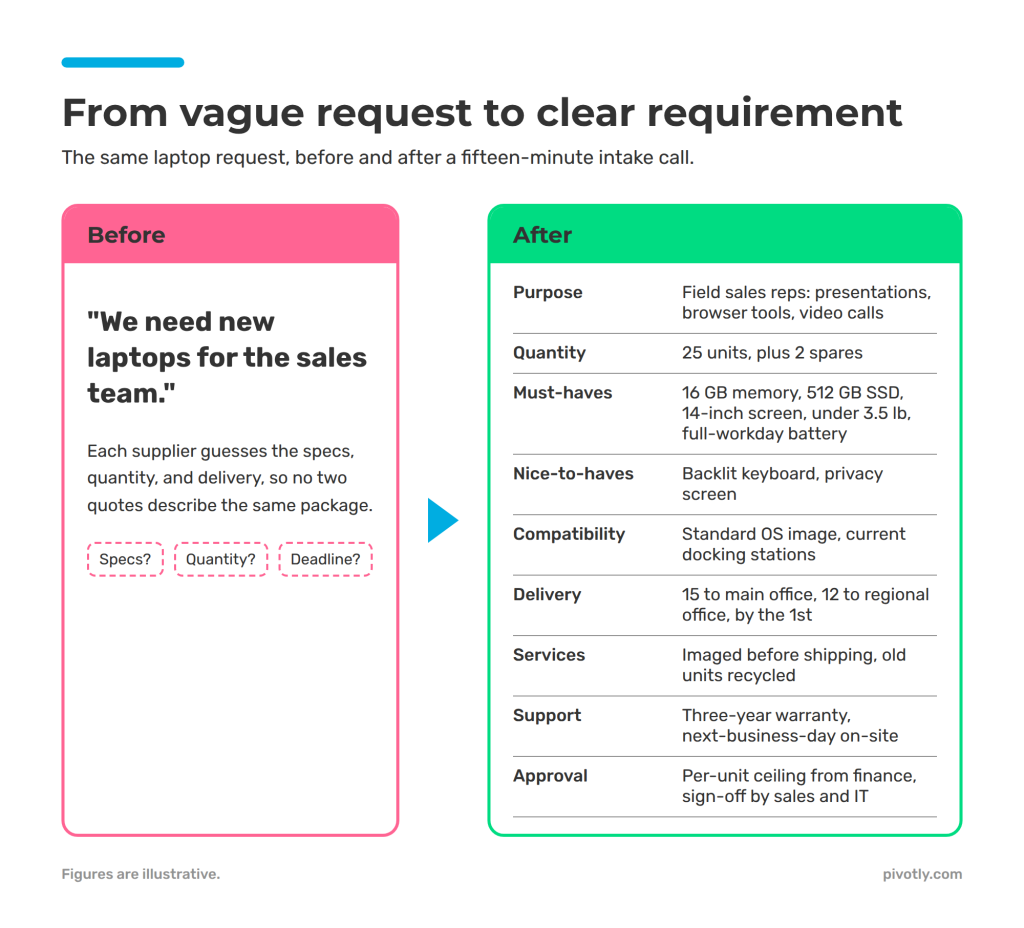
Every line in that list is something a supplier can price. That means every quote you receive will describe the same package, down to the delivery date. That shared baseline is the whole point of procurement requirements gathering. When the quotes come back, you can weigh cost, lead time, and service on equal terms without chasing down what each supplier assumed.
Notice that the requester still wants new laptops and that you did not add anything they never asked for. You simply turned what they already knew into written procurement requirements that travel with the request from intake to purchase order.
Habits that keep procurement requirements clear
The script handles most of the work at procurement intake, and a few habits help each requirement hold up once it reaches your suppliers.
- Write must-haves as numbers or yes-or-no tests. “Long battery life” invites a debate, while “rated for at least ten hours” gives every supplier the same target to hit.
- Describe the need before the brand. When a requester names a specific model, ask what that model does that matters to them, so you can open the event to comparable options.
- Send the requirement back for a quick confirmation. A short reply from the requester saying the details are right prevents most of the surprises that surface after the purchase order goes out.
- Save every finished requirement. Your next laptop request can start from last year’s version, which turns a fifteen-minute call into a five-minute check of what has changed.
These habits also make your work easier to hand off, because anyone on the team can pick up a request and see exactly what was agreed and why. Over time, those saved requirements become a library that speeds up every future request your team handles.
Where procurement requirements gathering stalls, and how to keep it moving
The script works, but the answers still arrive scattered across emails, chat threads, attachments, and the notes you jotted down during the call. Pulling those details into one clean document is the slowest part of gathering requirements, and it is the part that quietly eats your week.
That is where Pivotly Core fits into your process. Pivotly pulls the details out of the requests, emails, and files your team already receives, and it links every value back to the message or page it came from. You verify each one before it moves forward, so nothing reaches a supplier as a guess. Your requirement lands in one place and is ready for the sourcing event, so your buyers can spend their hours on supplier conversations and better decisions. When procurement requirements gathering starts from verified details instead of a scattered inbox, your team can take on more requests without adding anyone to the queue.
For IT and operations leaders
Everyone can generate an app. Almost no one can run one safely.
One governed place for every app, workflow, and AI action. In your tenant, your data stays yours.
Book an assessment