Guide · Operationalizing AI AI operations
AI operations · Adoption
How Are Companies Operationalizing AI?
Operationalizing AI means moving it from pilots into daily work, with the governance, data ownership, and human oversight to run it safely at scale.
Plenty of companies have run an AI pilot. Far fewer have AI running in daily work. The gap isn't the model, it's the foundation underneath: clean data, clear ownership, governance, and a human in the loop. Here's what operationalizing AI actually takes, and how teams get there.
| AI use case | Owner | Status |
|---|---|---|
| Claims triage | Operations | Live |
| Contract review | Legal | Live |
| Support assistant | Customer success | Live |
| Demand forecasting | Finance | Piloting |
| Every model owned, governed, and checked by a person. | ||
Why is operationalizing AI so hard?
Operationalizing AI is hard because most AI stalls in pilots. Moving it into daily work needs clean data, clear ownership, governance, and human oversight.
A pilot is easy to make look good. You pick a clean use case, a willing team, and a controlled dataset, and the demo lands. Then it's supposed to become part of how the business runs, and that's where most efforts stall. The model was never the hard part. The hard part is everything around it.
A demo that impresses and an AI you can run every day are two different things.
Running AI in production means feeding it data that's actually organized and trustworthy, knowing who owns that data and what the tool does with it, keeping a person accountable for what the AI decides, and being able to answer for all of it when IT, an auditor, or a customer asks. Skip that scaffolding and one of two things happens: the pilot quietly dies, or worse, teams route around IT and stand up their own AI tools with no oversight at all.
So operationalizing AI is less about picking a smarter model and more about building the foundation that lets any model run safely, repeatably, and at scale. The sections below break that foundation into its parts.
Why do most AI pilots never reach production?
Because a pilot proves the model can work, not that the organization can run it. Without a data foundation, clear ownership, governance, and human oversight, there's no safe way to scale it past the demo, so it stays a demo.
What's the difference between using AI and operationalizing it?
Using AI is individuals trying tools. Operationalizing it is the whole organization running AI as part of how work gets done: governed, owned, and dependable. One is activity, the other is a capability the business can count on.
What is operational AI?
Operational AI is AI that runs in daily work, not a pilot: governed, owned, integrated into real workflows, and dependable enough to rely on.
Operational AI is the difference between AI you're testing and AI you're running. It's embedded in an actual workflow, it draws on data the business trusts, it has an owner accountable for its output, and it's governed and logged so nobody has to take it on faith. When a team can lean on it the way they lean on any other system, it's operational.
That bar is higher than a proof of concept, and it's the bar that matters, because value shows up in production, not in the pilot deck. Reaching it is less about the AI itself and more about the layer beneath it: the data, the controls, and the human checkpoints that make the output dependable.
What's the difference between a pilot and operational AI?
A pilot proves an AI can do a task in controlled conditions. Operational AI does that task in daily work, on live data, with an owner, governance, and oversight, so the business can actually depend on it.
What does operational AI need to run reliably?
A trustworthy data foundation, a clear owner, governance and an audit trail, integration into the real workflow, and a human in the loop. Take any one away and reliability, or accountability, breaks down.
In practice, the line is accountability. Experiments and pilots can be someone's side project; operational AI has an owner who answers for its output, a governance trail behind it, and a place in the workflow where people expect it to be. That higher bar is what separates AI that creates value from AI that creates slide decks.
Go deeper in our leaders' guide to operational AI.
How do you integrate AI into human workflows?
You integrate AI into human workflows by putting it where the work already happens, with a person in the loop to approve what it does.
AI that lives in a separate tool people have to remember to open doesn't get used. Integration means meeting the work where it is: the inbox, the document, the record in the system of record, so the AI does the tedious first pass and hands a person something to check, not another app to babysit. The point is more output from the same team, not fewer people.
Keeping a human in the loop is what makes that safe. The AI drafts, extracts, or suggests; a person approves, corrects, and owns the result. Done well, the AI takes the busywork and the person keeps the judgment, which is exactly the split that makes teams trust it enough to rely on it.
Should AI replace or assist the people doing the work?
Assist. The durable pattern is AI handling the repetitive first pass and a person owning the decision. It's a capacity gain, more done by the same team, not a headcount play, and it keeps accountability with a human.
How do you keep a human in the loop?
Build the approval step into the workflow itself: the AI proposes, a named person reviews and confirms before anything ships, and every action is logged, so there's always someone accountable for what the AI did.
The mistake teams make is treating integration as an add-on: a chatbot bolted onto the side, a tool people are told to use. What sticks is AI that removes a step someone already dreads, in the place they already work, so using it is easier than not using it. Adoption follows convenience, not mandates.
See the patterns that work in our post on integrating AI into human workflows.
Who owns the data in AI tools?
Who owns the data in AI tools depends on the tool. With many, your inputs and outputs aren't clearly yours, so check before you scale.
Before AI is part of daily work, someone has to answer a basic question: whose data is this once it goes through the tool? With a lot of consumer and even enterprise AI tools, the answer is murky, your prompts, documents, and outputs may be retained, used to improve the vendor's models, or governed by terms you didn't read closely. That's a problem you don't want to discover after the tool is embedded in a workflow.
Operationalizing AI responsibly means the data stays yours and under your control: you know what's kept, what's used for training, and who can reach it. Data ownership isn't a legal footnote, it's a prerequisite, because you can't put AI at the center of the business on data you don't actually control.
Does the AI vendor train on your data?
Some do, some don't, and the default varies by tool and tier. Check the terms before you operationalize, because if your data trains someone else's model, it's not fully yours anymore.
How do you keep control of your data in AI tools?
Use tools where your data stays yours, access-controlled to your team, with clear terms on retention and training, so you decide what's kept and who can reach it rather than inheriting a vendor's defaults.
This matters more once AI is central, not less. A tool you piloted on low-stakes data becomes a liability the moment it touches contracts, customer records, or financials. Settling ownership and retention up front is far cheaper than unwinding it after the tool is embedded in a dozen workflows.
Read the full breakdown of who owns the data in AI tools.
What is shadow AI governance?
Shadow AI governance is bringing the AI tools teams use without approval into view, so IT can secure and audit them instead of banning them.
The moment AI is useful, people adopt it, with or without IT's blessing. Shadow AI is all the tools running in the business that IT can't see, secure, or account for: the assistant someone in finance started using last Tuesday, the model wired into a spreadsheet, the app a team stood up on their own. Every one is a question IT can't answer if an auditor or a breach comes calling.
Shadow AI governance is the answer that isn't a ban, because bans don't work; people route around them. Instead you bring those tools into view, give them a sanctioned, governed home, and make the safe path the easy path. Governance becomes the thing that lets IT say yes to AI, rather than the thing that says no.
What is shadow AI?
Shadow AI is any AI tool or model running in the business without IT's knowledge or approval. It's a governance risk because IT can't secure, audit, or account for something it can't see.
How do you govern AI you can't see?
First you make it visible, inventory what's actually running, then give teams a sanctioned place to do the same work so the safe option is also the easy one, and govern from there.
The instinct to lock it all down is understandable, and it backfires. Every ban teaches people to hide their AI use, which is the opposite of governance. Visibility first, then a sanctioned path, is what actually shrinks the shadow surface, because people will always reach for whatever makes their day easier.
Read the full shadow AI governance guide.
What does AI adoption in business actually take?
AI adoption in business takes more than tools: a data foundation, governance, ownership, and workflows people actually use, so AI sticks instead of stalling.
Buying AI tools is easy. Getting a business to actually adopt them is the hard part, and it's rarely a technology problem. Adoption sticks when the AI is built on data people trust, when it's governed so IT will sign off, when ownership is clear, and when it lives inside the work rather than beside it. Miss those and you get a shelf of licenses nobody uses.
The teams that make AI stick treat adoption as an operational change, not a tool rollout. They start where the pain and the data are clearest, keep a person accountable, and expand from a base that already works. That's the same compounding pattern operational AI runs on: each workflow you stand up makes the next one easier.
What blocks AI adoption in business?
Usually not the model. It's messy data, unclear ownership, governance gaps that make IT nervous, and tools bolted beside the work instead of inside it. Fix the foundation and adoption follows.
How do you drive AI adoption across teams?
Start with a use case where the data and the payoff are clear, keep humans in the loop, govern it so IT can say yes, and expand from the workflows that already work rather than mandating from the top.
It helps to measure adoption honestly, too. Licenses bought isn't adoption; workflows changed is. The teams that succeed track whether the AI is actually in the daily motion and expand from there, rather than declaring victory at the pilot and moving on to the next shiny thing.
Watch our session on AI adoption in business.
How do the stages of operationalizing AI compare?
AI maturity moves through three stages: experiment, pilot, and operational. They differ most in data foundation, governance, oversight, and integration into daily work.
Most AI efforts sit at one of three stages. Here's what separates them on the things that decide whether AI actually runs the business.
| Stage | Data foundation | Governance & audit | Human oversight | Integrated into work | Scales safely |
|---|---|---|---|---|---|
| Experiment | None | None | Ad hoc | No | No |
| Pilot | Partial | Partial | Manual | One workflow | Not yet |
| Operational | Yes | Yes | Built in | Yes | Yes |
Experiments prove curiosity, pilots prove a use case, and only operational AI proves the business can run on it. The jump that matters is from pilot to operational, and it's won on the foundation, data, governance, oversight, and integration, not on a better model. And because each operational workflow strengthens the data foundation the next one draws on, the climb gets easier the further you go.
What moves AI from pilot to operational?
Putting the foundation in place: a trustworthy data layer, governance and audit, clear ownership, a human in the loop, and integration into the real workflow. That's what lets a pilot scale into something the business depends on.
What makes AI safe to operationalize?
Teams operationalize AI on Pivotly because it gives them the foundation to trust it: governance they control, data that stays theirs, and human-checked, source-linked outputs.
Safe operationalizing comes down to the foundation under the AI. Pivotly gives teams their own governance and audit trail, keeps their data theirs, links every AI output back to the exact source it came from so it's verifiable rather than a black box, and keeps a person in the loop on what ships. That's the layer that turns a promising pilot into AI a team can run every day, without handing IT a risk it can't answer for.
What should you look for in a platform to operationalize AI?
Look for four things: a data foundation you trust, governance and an audit trail you control, clear ownership of your data, and human-in-the-loop approval built into the workflow. A platform that gives you all four is one you can safely put at the center of the business.



What do leaders ask about operationalizing AI?
The questions leaders ask most about operationalizing AI, from why pilots stall to how data ownership, governance, and human oversight fit together.
QWhat does it mean to operationalize AI?
It means moving AI from a pilot into daily work, so it runs on live data, inside real workflows, with an owner, governance, and human oversight, dependable enough for the business to rely on.
QWhy do most AI pilots fail to reach production?
A pilot proves the model works, not that the organization can run it. Without a data foundation, ownership, governance, and oversight, there's no safe way to scale past the demo.
QHow do you integrate AI into existing workflows?
Put it where the work already happens, have it handle the repetitive first pass, and keep a person to approve the result. AI takes the busywork, the human keeps the judgment.
QWho owns the data in AI tools?
It depends on the tool. With many, your inputs and outputs may be retained or used for training. Check the terms, and operationalize on tools where the data stays yours.
QWhat is shadow AI, and why is it a risk?
Shadow AI is any AI running in the business without IT's approval. It's a risk because IT can't secure, audit, or account for a tool it can't see.
QWhat does AI governance involve?
Knowing what AI is running, controlling who and what it can reach, keeping a human accountable, and logging every action, so you can secure it and answer for it.
QHow do you keep a human in the loop when scaling AI?
Build the approval step into the workflow: the AI proposes, a named person reviews and confirms before anything ships, and every action is logged so accountability stays with a person.
QWhat's the difference between AI adoption and operationalizing AI?
Adoption is getting people to use AI. Operationalizing is making it dependable enough to run daily work, governed, owned, and integrated. Adoption without that foundation tends to stall.
QWhat do you need in place before scaling AI?
A trustworthy data foundation, clear data ownership, governance and audit, human oversight, and integration into the real workflow. Those are the prerequisites, not the model.
QHow does Pivotly help operationalize AI?
Pivotly gives teams the foundation: governance they control, data that stays theirs, source-linked outputs, and a human in the loop, so AI can move from pilot into daily work safely.
QIs operational AI only for large companies?
No. Any team with repetitive, document-heavy, or cross-system work benefits. Smaller teams often move faster, because there's less to coordinate, as long as the data foundation and oversight are in place.
QHow long does it take to operationalize AI?
It depends on the foundation, not the model. With clean data, clear ownership, and governance ready, a first workflow can go live quickly, and each one after that is faster because the base already exists.
Where can you go deeper on operationalizing AI?
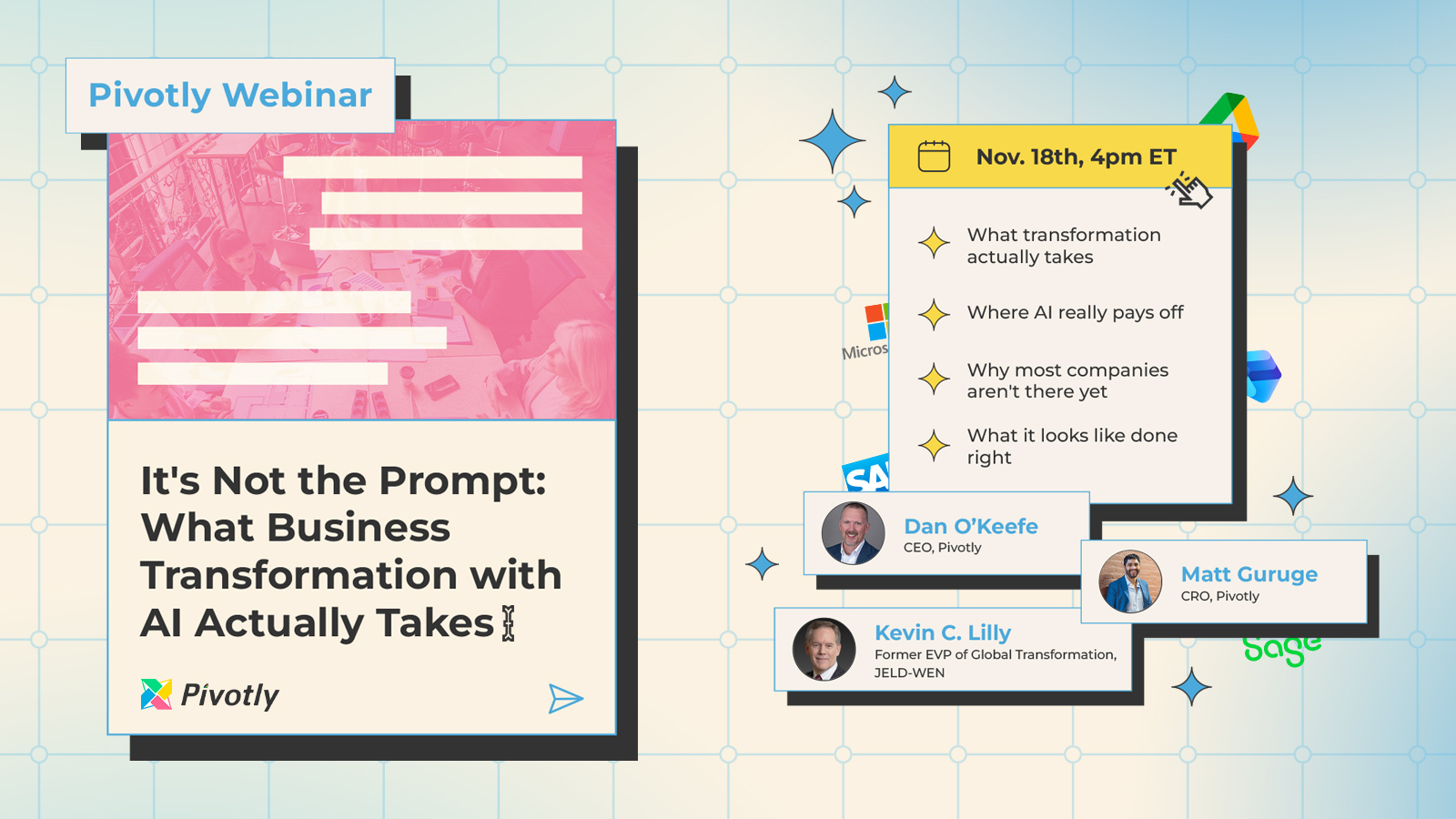
The full set of guides, papers, and the session on operationalizing AI, so you can go as deep as you need.
White papers
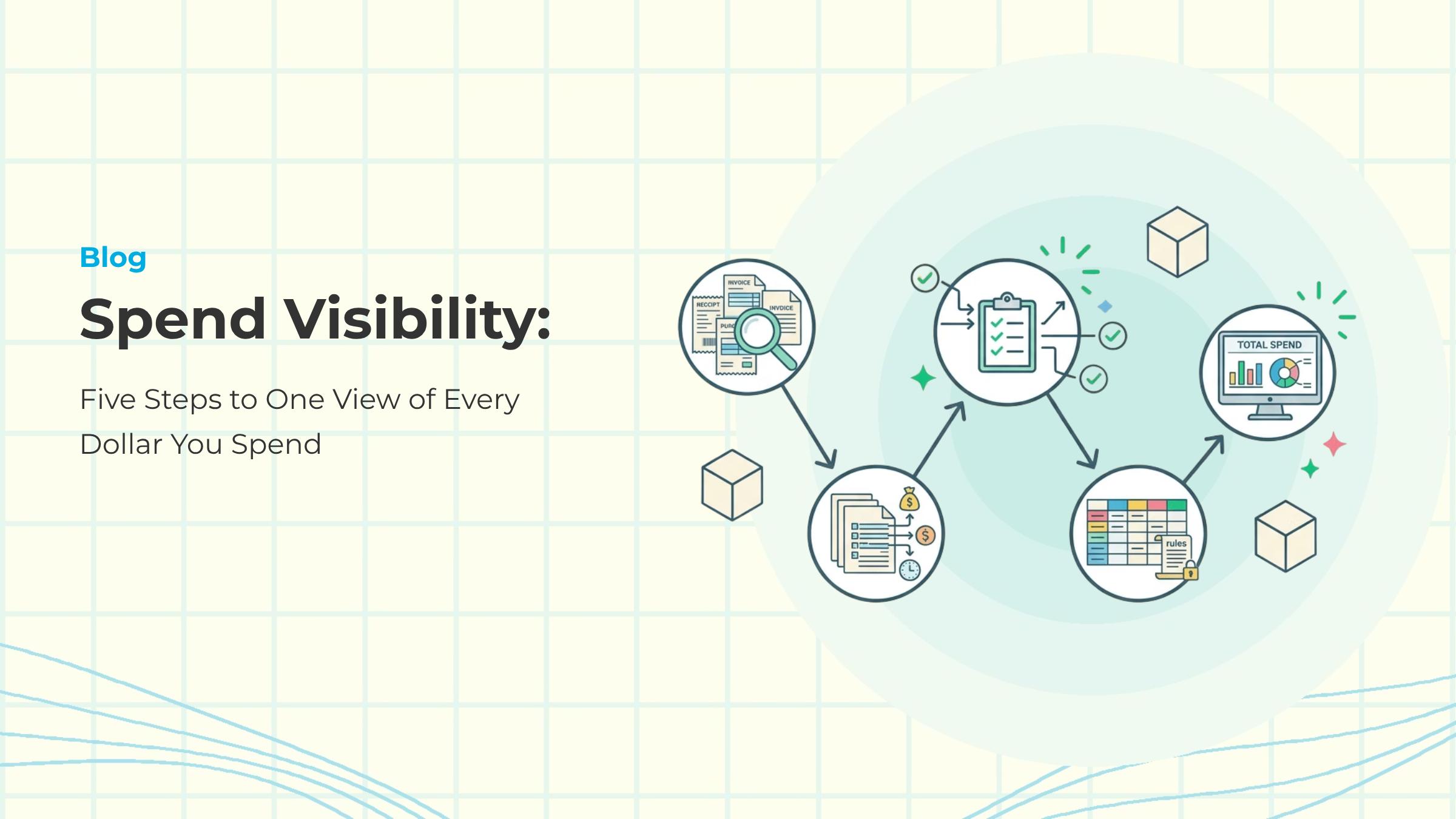
Blog posts
See operational AI on your own data.
Bring your own systems and documents. We'll show you what governed, human-checked AI looks like running on your data, not a canned demo.
Request a demo →A working session on your own data. No pitch.